How Casino Amenities Shape the Rhythm of a Visit
Casino amenities shape guest flow when their locations, hours, and service styles fit the visit. Learn how to coordinate dining and events with clearer choices.
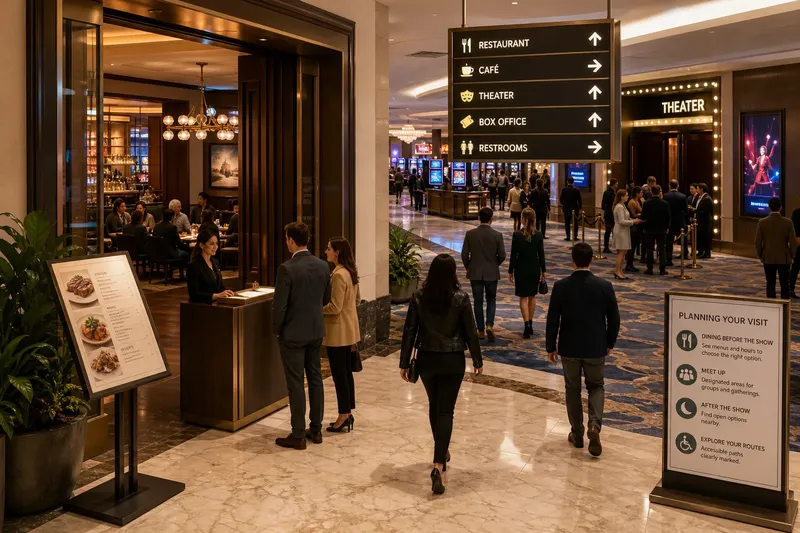
Casino amenities shape guest flow when their locations and service hours fit the sequence of a visit. A restaurant near a theater, for example, can make dinner before a show straightforward—or create a bottleneck if guests cannot tell whether they have time to eat.
Plan around the transition between activities
Guests experience a casino as a series of decisions: where to go after arriving, when to eat, how to reach an event, and what remains open afterward. An amenity supports that sequence when its location, service style, and hours suit the activity before and after it.
Consider a restaurant beside a theater entrance. Its proximity may help guests find dinner, but the same location can become congested as ticket holders arrive. A host stand set away from the theater queue, visible menus, and clear directions to both entrances can help guests understand where to go without confusing dining arrivals with event check-in.
Make each venue’s role easy to understand
Restaurants, bars, lounges, and cafés can seem interchangeable on a directory unless their purpose is clear. Names, menus, furniture, and service descriptions should tell guests what kind of visit to expect: a seated meal, a quick drink, or a place to meet before an event.
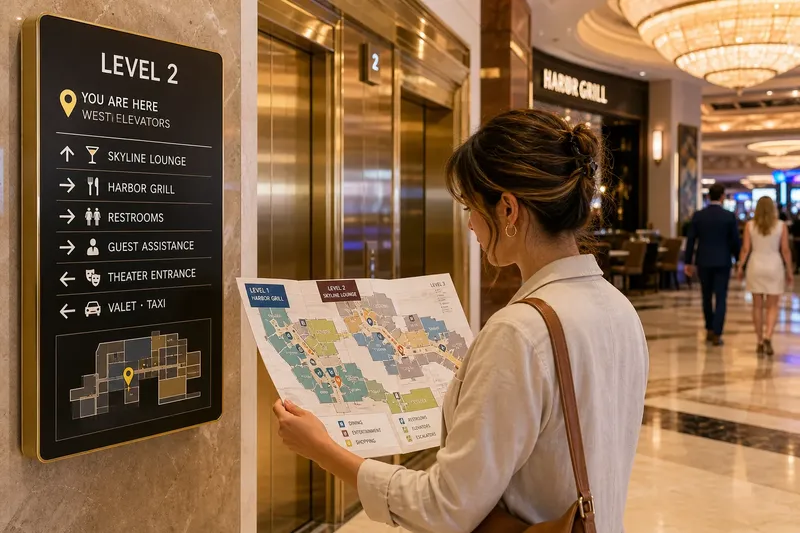
That clarity does not require elaborate signage. A menu displayed near a restaurant entrance can show whether the meal suits a short interval. A concise directory description can distinguish a table-service restaurant from a counter-service café. It is not worth the effort to add decorative labels that repeat what the layout and service already communicate.
Coordinate dining hours with event schedules
A venue can be in the right place and still fail to fit a guest’s plans if its service hours do not align with event times. Review restaurant hours alongside performance start and end times, then check what options remain available before guests arrive and after they leave. The practical choices may include adjusting hours, changing staffing, or telling guests in advance which venues are open.
Service style matters as much as the clock. A full-service meal asks guests to allow time for ordering and dining, while a café may be a better fit for a brief interval. Displaying the menu and service format before guests enter helps them choose without having to reverse course after being seated.
Check whether the amenities fit different visits
A solo visitor, a group meeting before a show, and a family arriving for dinner may need different information or routes. Use observations from guest questions, queue locations, and directory searches to identify where people hesitate. Then decide whether the answer is a clearer description, a changed route, or a different venue arrangement.
- Check: Guests ask whether a restaurant can serve them before a show. If the menu and service style are hard to see from the entrance, then display them there; if the meal requires more time than the event schedule allows, direct guests to a faster option.
- Check: Groups gather in the theater check-in queue. If a nearby area can hold a meeting point without blocking circulation, name it in event information; if no suitable area exists, tell groups where to meet away from the entrance.
- Check: Guests leave a performance looking for an open place to eat. If a nearby venue can serve them, make its location and hours easy to find; if service cannot extend, list the available alternatives before the performance.
- Check: A café and a restaurant appear similar in the directory. If their service styles differ, describe those differences in plain language; if their roles genuinely overlap, clarify which one suits a shorter visit.
- Check: Guests take a route that passes through a dining queue to reach an event. If another route is available, mark and describe it; if no alternate route exists, separate the queue from the main path as much as the layout allows.
- Check: Visitors with mobility needs cannot tell which route reaches a restaurant or venue. If an accessible route is available, show it consistently on signs and directories; if route details are uncertain, ask the appropriate accessibility professional to review the information and path.
How can venues coordinate amenities with an event?
What should guests see before choosing a restaurant?
They should be able to assess the menu, service style, and location before committing to a route or wait. A visible menu and a straightforward directory description help guests judge whether the restaurant fits their plans.
Where should groups meet before a show?
Choose a recognizable location that does not overlap with the check-in queue. Use the same venue name in ticket information, directories, and signs so guests can identify it consistently.
What should a venue do if dining hours do not match an event?
Compare service hours with the event schedule and identify which options will be available before and after the performance. If changing hours is not practical, give guests clear information about alternatives before they arrive.
How can a directory distinguish similar venues?
Describe what a guest can do there, such as order a full meal or get a quick drink. If names alone do not make the difference clear, add a concise service description rather than another decorative label.
Work through a hypothetical event schedule
Imagine a fictional casino has one restaurant near its theater and one café elsewhere on the property. For this invented planning exercise, assume the restaurant closes when the theater performance begins, while the café remains open afterward. Ticket holders receive an event message that names the theater but says nothing about dining.
The venue team first writes down those starting inputs: the restaurant’s stated closing time, the performance start and end times, the café’s stated hours, and the walking directions shown in the directory. Next, the team compares the restaurant’s service window with the time guests have before the performance. If that window leaves too little time for the restaurant’s service style, the team updates the event message to identify the café as the quicker option and shows its route. Then the team checks whether the café is listed as open after the performance; if not, it corrects the directory or tells guests that the café will be closed.
The expected observable output is a message that names a suitable pre-show option and accurately describes what is available afterward. The decision rule is simple: recommend a venue only when its posted hours and service style fit the guest’s available time; otherwise, state the alternative plainly. This avoids promising access that the schedule cannot support.
Casino guest flow depends on the fit between a venue’s purpose, location, and operating hours. For a clearer visit, give guests enough information to choose the next stop before they reach a queue or find a service closed. Even a precise directory description can make the available options easier to compare.